The Complete Guide
Climbing Holds for Kids: A Buyer's Guide to Home Climbing Walls
Nobody has to talk a child into climbing. The trick is giving that instinct somewhere safe to go, and that is exactly what these climbing holds do. Bolted to a cubby wall, a fence or a sturdy timber board, they turn a flat surface into a route to the top.
The holds are shaped for children from age 2 up. They are chunky enough for beginner grip strength, deep enough for small fingers to hook onto and wide enough for a foot to stand on with confidence. Bright mixed colours make it easy to set colour-coded routes as climbers get cleverer.
Quality mounting bolts come in the box, so the job goes from parcel to climbing wall in an afternoon with basic tools. Fix them into solid timber, spread them wide for an easy traverse or stack them steep for a challenge, and keep the landing zone below soft and clear.
The quiet genius of a hold set is that the wall never gets old. Unbolt a few holds, move them, and yesterday's easy route becomes today's project. It is climbing equipment and route-setting puzzle in one box.
Watch a child in any playground and you will see the same thing: whatever there is to climb, they are climbing it. That urge is built in, and it is one of the best workouts a growing body can get. A set of climbing holds for kids takes that instinct and gives it a safe, controlled home on your own cubby, fence or wall. This set comes with quality mounting bolts in the box and holds shaped for hands and feet from age 2 up. Here is how to choose, plan and build a wall they will climb for years.
What makes a hold right for children
Adult climbing holds assume strong fingers and precise feet. Children need the opposite: big, chunky shapes with deep, friendly grips that reward a whole-hand grab, and enough surface for a wobbly foot to stand on with confidence.
That is what this set is shaped for. The holds are grippy and generously sized for climbers from age 2, which means a toddler's first step-up and a seven-year-old's speed run both work on the same wall. Bright mixed colours are not just decoration either; they let you set colour-coded routes later, which is how one wall keeps producing new challenges.
Where to build
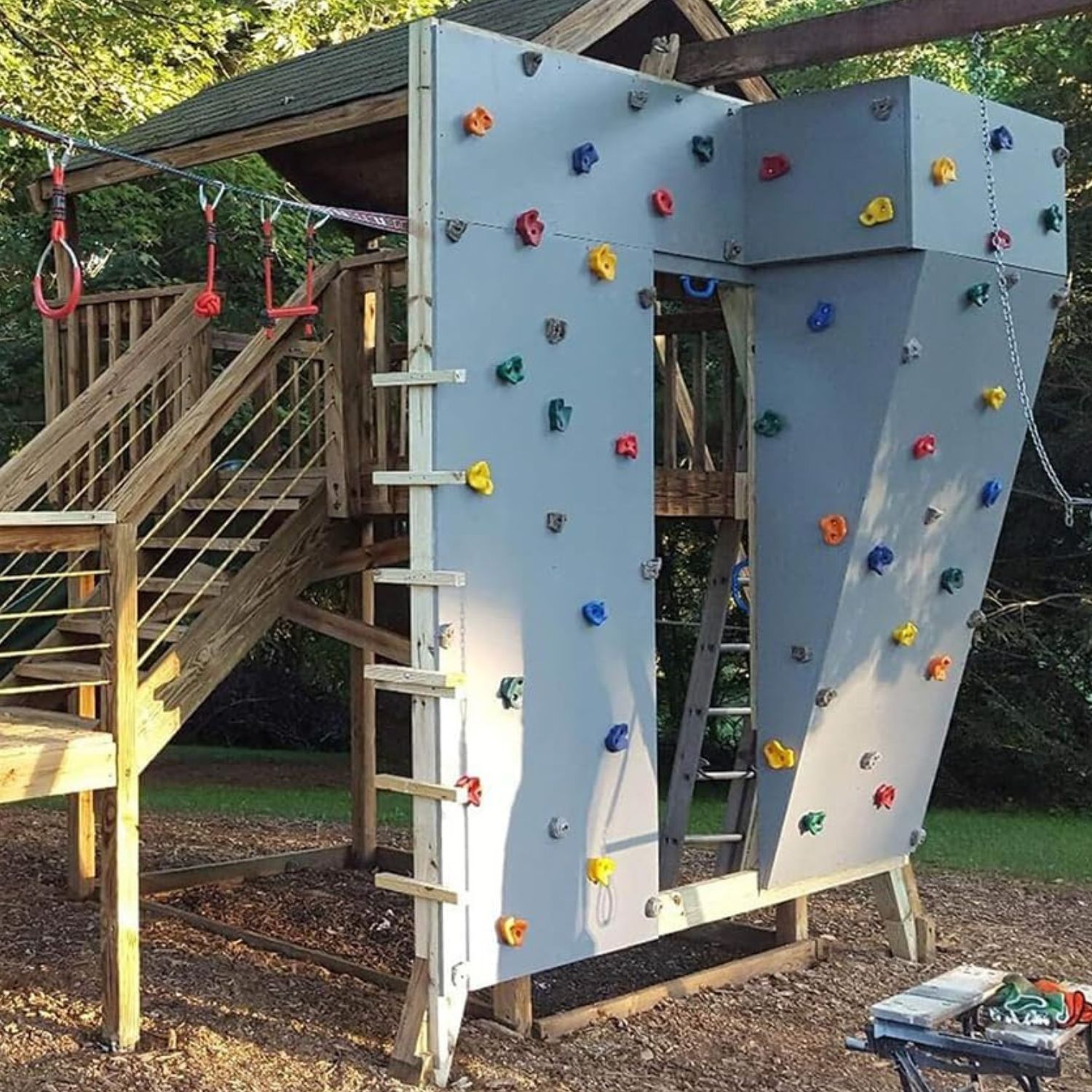
The classic spot is the cubby house wall, and it is popular for good reason: the structure is already solid, the height is modest, and the climb becomes the new favourite way in. One of our customers put it simply: the holds "quickly became the most favourite part of the cubby house."
A solid timber fence works well too, as long as the palings are thick enough to take a bolt firmly and the landing side is soft. And indoors, the answer is a sheet of sturdy plywood fixed into the wall studs, with the holds bolted to the ply. That is the standard way to build an indoor climbing wall for kids without putting a single hold into plasterboard, and it turns a hallway or bedroom wall into a rainy-season energy burner.
The one rule that never changes: bolts go into solid material. The hold is only as strong as what it is fixed to.
Building it in an afternoon
Installation is honest DIY, not engineering. Mark your route, drill pilot holes, bolt each hold down firmly with the included bolts, and test each one with a good tug before the first climber arrives. If you can hang a shelf, you can build a climbing wall, and the fact that the quality bolts come in the box means the whole job happens in one afternoon instead of two hardware-store trips.
Plan the first route generously: holds about a child's shoulder-width apart, angling sideways rather than straight up. A low sideways traverse gives enormous play value with very little height, which is exactly where young climbers should start.
Safety that actually matters
Home climbing safety comes down to two things. First, the landing: keep the ground below soft (grass, mulch or a mat) and clear of toys, and keep routes low for young children, so a slip is a hop down rather than a fall. Second, the hardware: give the bolts a tightness check every few weeks and after heavy use, and glance at the timber for cracks while you are there.
Young children should climb with an adult close by. Older kids on a low, well-set route with a soft landing earn more independence, which is half the point of building them a wall of their own.
The wall that never gets old
Here is the difference between a hold set and almost every other piece of play equipment: when your child masters it, you change it. Unbolt a few holds, shift them, and yesterday's easy route is today's project. Add a colour rule ("only blue to the top"). Time the traverse. Add a second set and build a longer line for two climbers at once.
That is why a backyard climbing wall keeps earning its spot years after it goes up. It is not a toy with one trick; it is a challenge you re-set whenever the old one gets too easy.
The short version
Climbing holds for kids turn a wall you already own into the most-used play equipment in the yard. This set gives you chunky, grippy holds shaped for ages 2 and up, quality mounting bolts in the box, and a route you can rearrange forever. Fix them into solid timber, keep the landing soft, check the bolts now and then, and let the climbing instinct do the rest.