The Complete Guide
Sensory Swing: A Buyer's Guide to Calming Swings for Kids
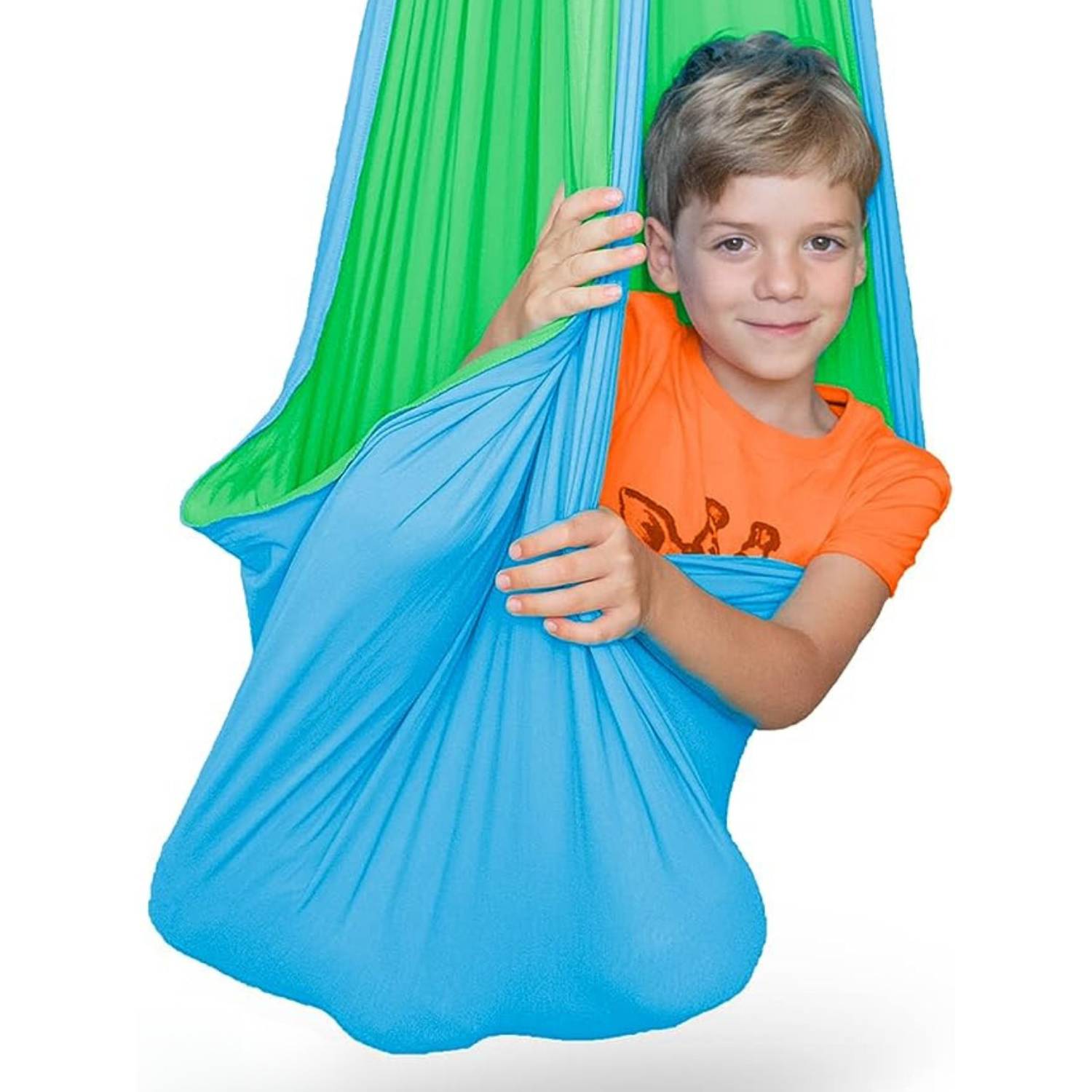
The Sensory Swing is a stretchy, wrap-style swing that does two calming things at once. The soft double-layer fabric gives a gentle, even squeeze around the whole body, and the swing adds slow, rhythmic movement. Together they create the kind of deep, settling input that many children instinctively seek out when the world feels like too much.
For children who experience sensory processing difficulties, that combination offers a secure place to self-regulate. Occupational therapists use swings like this in schools, clinics and sensory rooms for exactly this reason. At home, it becomes the go-to spot after a big day, a reliable way for a child to settle themselves without needing an adult to manage every step.
The cotton blend is soft against skin but genuinely strong, rated to hold up to 100 kg. That covers years of growing, sibling turn-taking, and the occasional adult who wants to see what the fuss is about. It arrives pre-assembled, so once you have a solid anchor point in a ceiling joist, beam or sturdy frame, it is ready the same day.
It is also, quite simply, a lovely place to be. Children read in it, listen to stories in it and disappear into it like a cocoon. The calming benefits are real, and so is the fun.
Some children can tell you when the day has been too much. Others show you, with big feelings, restless bodies and evenings that unravel. A sensory swing is one of the simplest tools families and therapists reach for, because it gives a child a private, reliable way to settle: climb in, wrap up, sway. This one is a stretchy double-layer cuddle swing that arrives pre-assembled and holds up to 100 kg. Here is how it works and what to think about before you hang one.
Why pressure plus movement calms
Two kinds of input have a well-known settling effect on busy nervous systems. The first is deep, even pressure across the body, the reason a firm hug or a weighted blanket feels grounding. The second is slow, rhythmic movement, the reason rocking has soothed children since forever.
A wrap-style sensory swing delivers both at once. The stretchy fabric hugs the whole body with gentle, even pressure, and the swing adds the sway. For many children, especially those who experience sensory processing difficulties, that combination is the fastest route from overwhelmed to okay.
The child stays in control, which matters. They decide how deep to sit, how much fabric to pull around themselves and how fast to move. Unlike a hug or tight clothing, the pressure is theirs to adjust, and that sense of control is part of why it works.
Fabric you can trust
The swing uses a double-layer cotton blend that manages to be two things at once: soft enough to press a cheek against, and strong enough to be rated to 100 kg.
That rating is worth pausing on. It covers a toddler, a teen and most adults, which means the swing is not something your child outgrows next year. It also means turn-taking siblings, a parent demonstrating, and years of daily climbing in and out are all within its comfort zone. The double-layer construction spreads the load and doubles the margin.
It arrives pre-assembled. There is nothing to sew, thread or rig; once you have an anchor point, the swing is up in minutes.
The anchor point is half the job
Every hanging swing is only as good as what it hangs from. Indoors, that means a ceiling joist, an exposed beam or a purpose-built swing frame, never plasterboard alone. Swing-rated hooks are inexpensive and available from any hardware store, and if drilling into your ceiling is outside your comfort zone, a tradesperson can fit one in half an hour.
Outdoors, a solid pergola beam or a strong, healthy tree branch does the job, with the swing brought in out of the weather between sessions.
Hang the pocket low enough that your child can climb in and out on their own, keep the swinging range clear of anything hard, and give the anchor and fabric a five-second glance before use. Those small habits make the swing a safe daily fixture.
Home, school and therapy
The same swing does different jobs in different places. At home it becomes the calm-down corner, the reading nook and the wind-down step before bed. Ten minutes of slow swaying with a book is a genuinely effective way to downshift a busy body before the bedtime routine starts.
In classrooms and daycare centres, an indoor sensory swing anchors the quiet corner, giving children a self-serve way to regulate before small feelings become big ones. And in occupational therapy settings, therapists use swings like this deliberately, as part of structured sensory work. If your child sees a therapist, ask how to get the most from the swing at home; a few minutes of professional guidance goes a long way.
Who it suits
Children who seek out deep pressure, love tight hiding spots or calm down with rocking tend to take to a therapy swing immediately. Families of children with autism, ADHD or sensory processing differences often describe it as one of the most-used tools in the house.
But no diagnosis is required. Any child who loves to swing, hide and cocoon will claim it within the hour, and the 100 kg rating means the adults get a turn too. It is a calming tool that happens to be great fun, which is the best kind.
The short version
A sensory swing wraps a child in gentle pressure while they sway, and that simple combination helps busy bodies and minds settle. This one is a pre-assembled, double-layer cotton blend cuddle swing, 120 x 150 cm, rated to 100 kg, happy indoors or out. Fix a proper anchor into solid structure, hang it low over a clear soft space, and give your child a quiet place to land on the loud days.